The Body as a Small Universe
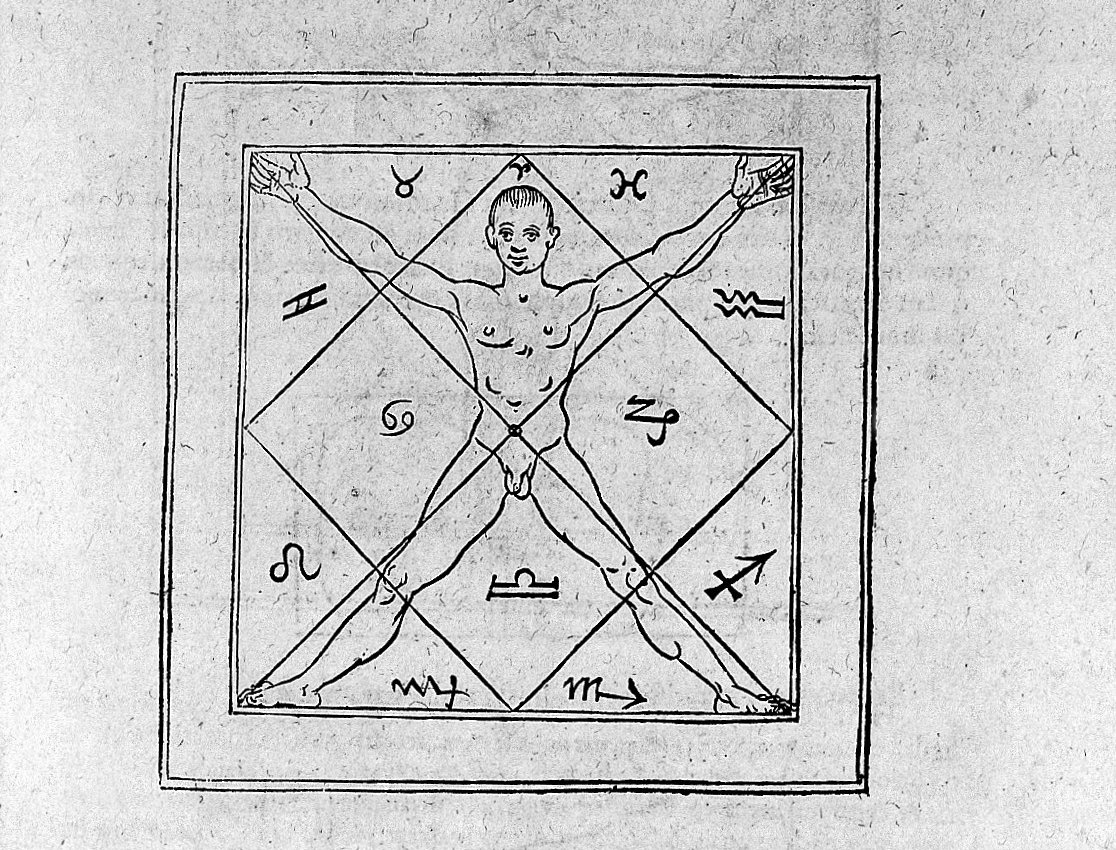
Four elements, four qualities, four humors, and four temperaments, all lined up so the body echoed the cosmos. The old and rather lovely idea of the person as a small world.
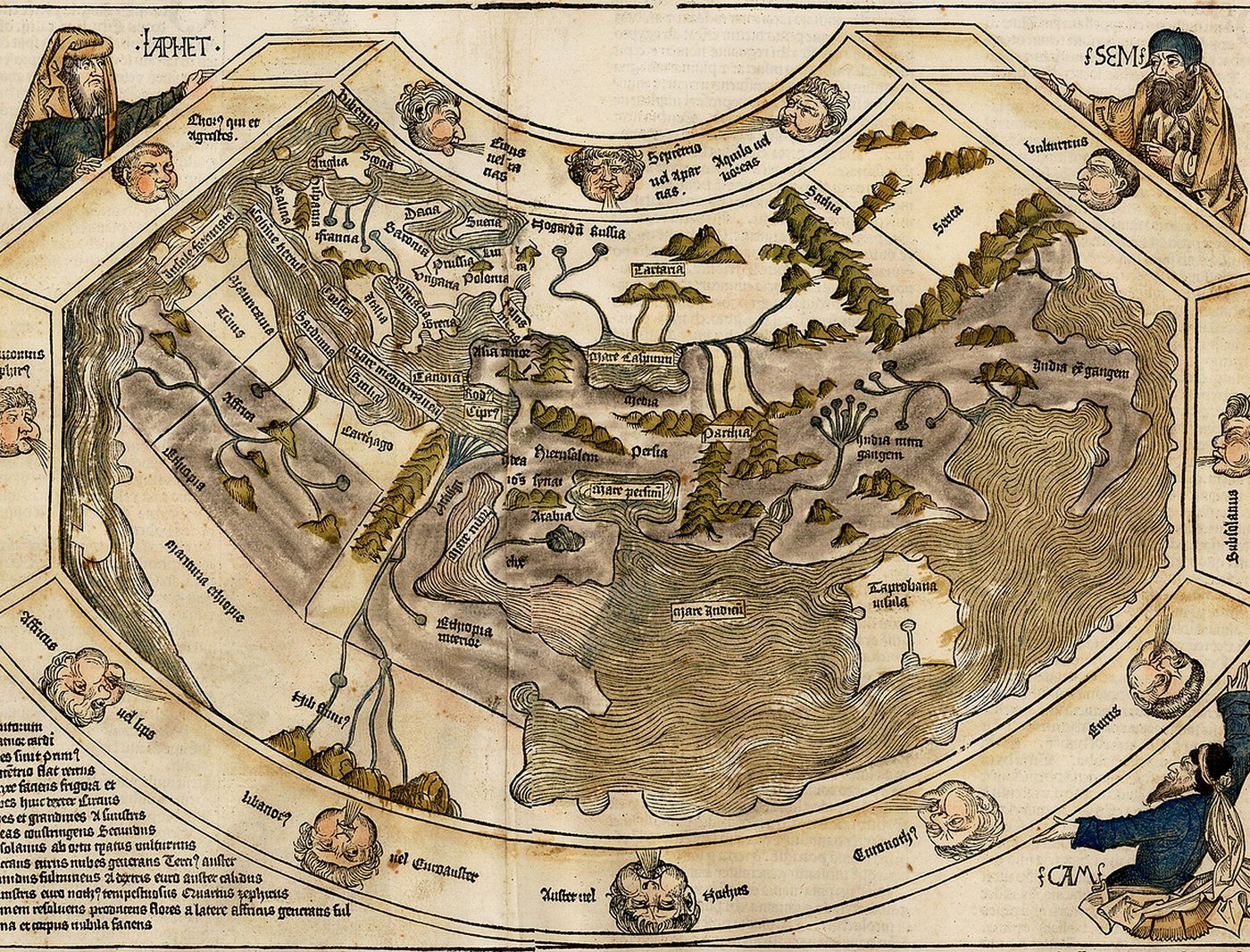
In some medieval manuscripts you find a diagram shaped like a wheel. At its center sits a single human figure. Around it turn four rings: the elements, the qualities, the humors, the seasons, all lined up so the person seems stitched into the pattern of the whole world.
That picture was not decoration. It was an argument.
A little world
Greek thinkers liked to call a human being a mikros kosmos, a little world. The claim was bold and simple. The body is a small copy of the universe, made from the same stuff and obeying the same rules.
By the fifth century before our era, Empedocles had proposed that everything is built from four roots: fire, air, earth, and water. Aristotle later paired each element with two qualities pulled from a plain grid of hot, cold, wet, and dry. Fire is hot and dry. Air is hot and wet. Water is cold and wet. Earth is cold and dry.
If the world outside runs on these four things in these four qualities, the reasoning went, so does the body inside. The large world and the small one rhyme.
The four that line up
Physicians already had four fluids they believed governed health: blood, yellow bile, black bile, and phlegm. Setting the two sets of four side by side was almost irresistible, and they fit.
- Yellow bile matched fire, hot and dry. This was the choleric, fast to anger and fast to act.
- Blood matched air, hot and wet. This was the sanguine, warm and sociable.
- Black bile matched earth, cold and dry. This was the melancholic, grave and turned inward.
- Phlegm matched water, cold and wet. This was the phlegmatic, calm and slow to stir.
Four elements, four qualities, four humors, four temperaments. Each rung answered to the one above it. If you want the plain version of those types, here is what the four temperaments are.
Why it felt true
The pull of the scheme was order. One small set of ideas explained the sky, the sea, and the sickbed at once. The same qualities that turned spring into summer also turned a calm mood into a hot temper. Nothing was left over, and nothing was missing.
It was useful too, or at least it felt useful. If a fever ran hot and dry, a physician could reach for something cold and wet to balance it. If a person seemed cold and heavy, food and habits that warmed and lightened them might set things right. The system gave a doctor a way to reason from the cosmos down to the patient in front of him.
And it was beautiful the way a good map is beautiful. It set the human being at the center of things, not as the largest part of the universe but as a faithful miniature of it.
To know yourself was, in a small way, to know the world.
What became of it
We know now that the elements are not four, and that black bile was never a real fluid. Nothing is caused by an excess of phlegm. The chemistry was wrong from top to bottom, and no amount of symmetry could save it.
But look at what the scheme was actually doing under all that physics. It took the untidy variety of people and sorted it along two plain lines: warm or cool, dry or moist. Read those today as fast or slow, outward or inward, and the map still holds. Strip away the elements and the four temperaments remain a clean way to describe a temper.
The old diagram had one thing backward. We are not small copies of the cosmos, and our moods do not answer to the winds. Yet the wish underneath it, to find our own private weather inside some larger order, is one of the more human things the ancient world handed down. People kept using the four types long after they stopped believing in the fluids, because the types named something they could still see in themselves.
Find your temperament
Take the test