The Four Temperaments vs Modern Personality Types
The humors are an old descriptive lens; MBTI, the Big Five, the Enneagram, and DISC are measured tools. Here is where they honestly overlap, and where they do not.
There are two very different ways to describe a person, and we tend to blur them together. One is old and descriptive. Someone watches human nature for years and sorts what they see into a few recognizable kinds. The other is modern and measured. Researchers write questions, try them on thousands of people, and check whether the answers hold together in the numbers.
The four temperaments belong to the first kind. Myers-Briggs, the Big Five, the Enneagram, and DISC belong, in their own ways, to the second. Before we set them side by side, it is worth being honest about that gap.
An old lens, not a measured instrument
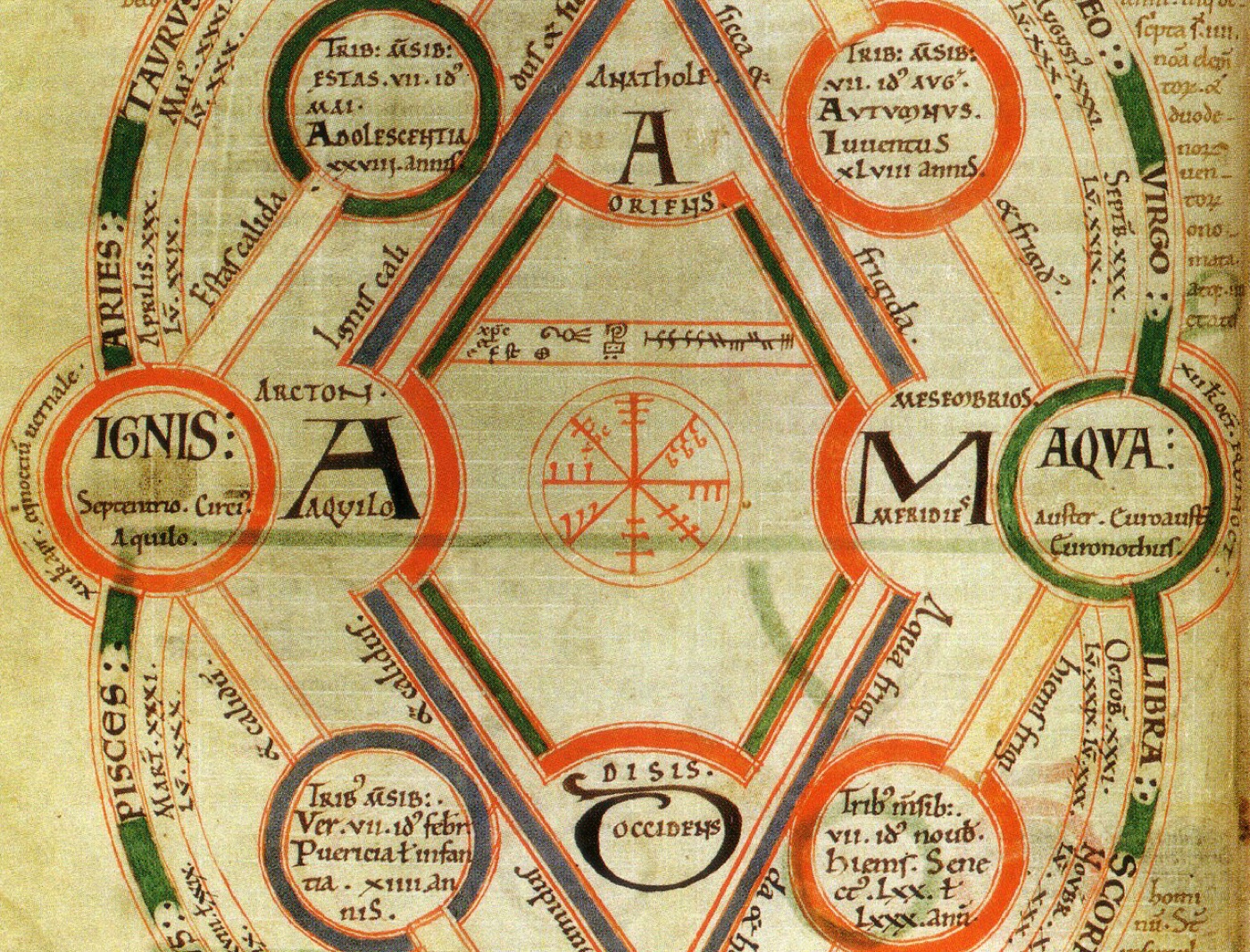
The temperaments come from the humoral tradition, where character was tied to four bodily fluids. The biology was wrong, and no one defends it now. What survived is the sorting: sanguine, choleric, melancholic, phlegmatic. It is a lens polished by centuries of watching people, not a scored test with a manual and a research base behind it.
That is the plain truth, and it is worth saying before any comparison, because the modern frameworks were built to a different standard. They can be scored, retested, and checked against data. The temperaments cannot, in that same way. So when the old picture and a modern one seem to agree, the agreement is a rough family resemblance, not a match.
The Big Five: the closest honest cousin
Of the modern tools, the Big Five is the one researchers trust most. It does not sort you into a type. It places you on five sliders: openness, conscientiousness, extraversion, agreeableness, and neuroticism. You sit high on some and low on others, and most people land near the middle of each.
Even so, you can watch the old four shapes forming out of those sliders. The sanguine looks like high extraversion with low neuroticism, outgoing and quick to brighten. The phlegmatic looks like low neuroticism and high agreeableness with less extraversion, calm and easy to be around. The melancholic overlaps most clearly with high neuroticism paired with real conscientiousness. The choleric reads as high extraversion and drive with lower agreeableness, the person who pushes.
One trait refuses to line up: openness, the pull toward ideas and novelty. The old four never measured it, so there is no clean temperament for it. That gap is a good reminder not to force the two maps flat against each other.
Myers-Briggs: a different four-way map
Myers-Briggs is the famous one, sixteen types drawn from four either-or splits. It is easy to like and easy to remember, though its type boundaries wobble when people retake the questionnaire, which is a real limit worth knowing.
The cleanest bridge to the temperaments is the first letter, extraversion or introversion. Sanguine and choleric lean outward; melancholic and phlegmatic lean inward. Past that, the mapping loosens fast. A thinking or feeling preference does not correspond to a single humor, and trying to convert one system into the other tends to break both. Better to treat them as two different sketches of the same face.
The Enneagram and DISC
The Enneagram asks a different question. Its nine types are about core motivation and fear, the why underneath, not the behavior you can watch from across a room. You can be a calm phlegmatic on the surface and any number of Enneagram types beneath. The two do not compete, since they aim at different layers of a person.
DISC is the surprise. Its four styles, Dominance, Influence, Steadiness, and Conscientiousness, land remarkably close to the temperaments, because DISC grew partly from the same instinct to split behavior four ways. Dominance echoes the choleric, Influence the sanguine, Steadiness the phlegmatic, and Conscientiousness the melancholic. It is the tightest fit of the modern set. It is also the shallowest, since DISC mostly describes how you act at work, not who you are at rest.
Why the old picture still holds up
Science moved past the four humors long ago, and it was right to. Yet the four-way portrait keeps its grip, and not out of nostalgia.
Part of it is that four is memorable. You can hold sanguine, choleric, melancholic, and phlegmatic in your head and actually use them tomorrow. Five sliders and sixteen codes are more precise but harder to carry around with you.
The deeper reason is that the temperaments capture the two things we notice first in anyone: how much energy they push outward, and how quickly their mood tips. That is most of a first impression, and the old four name it in plain words.
The modern tools are more exact. The old one is more portable. Both of those can be true at once.
Use the temperaments as a lens, then, not a verdict. If you want a starting read on your own blend, take the test and treat the result as a description to check against your life, not a label to live inside.
Find your temperament
Take the test