What Science Actually Found When It Tested the Four Temperaments
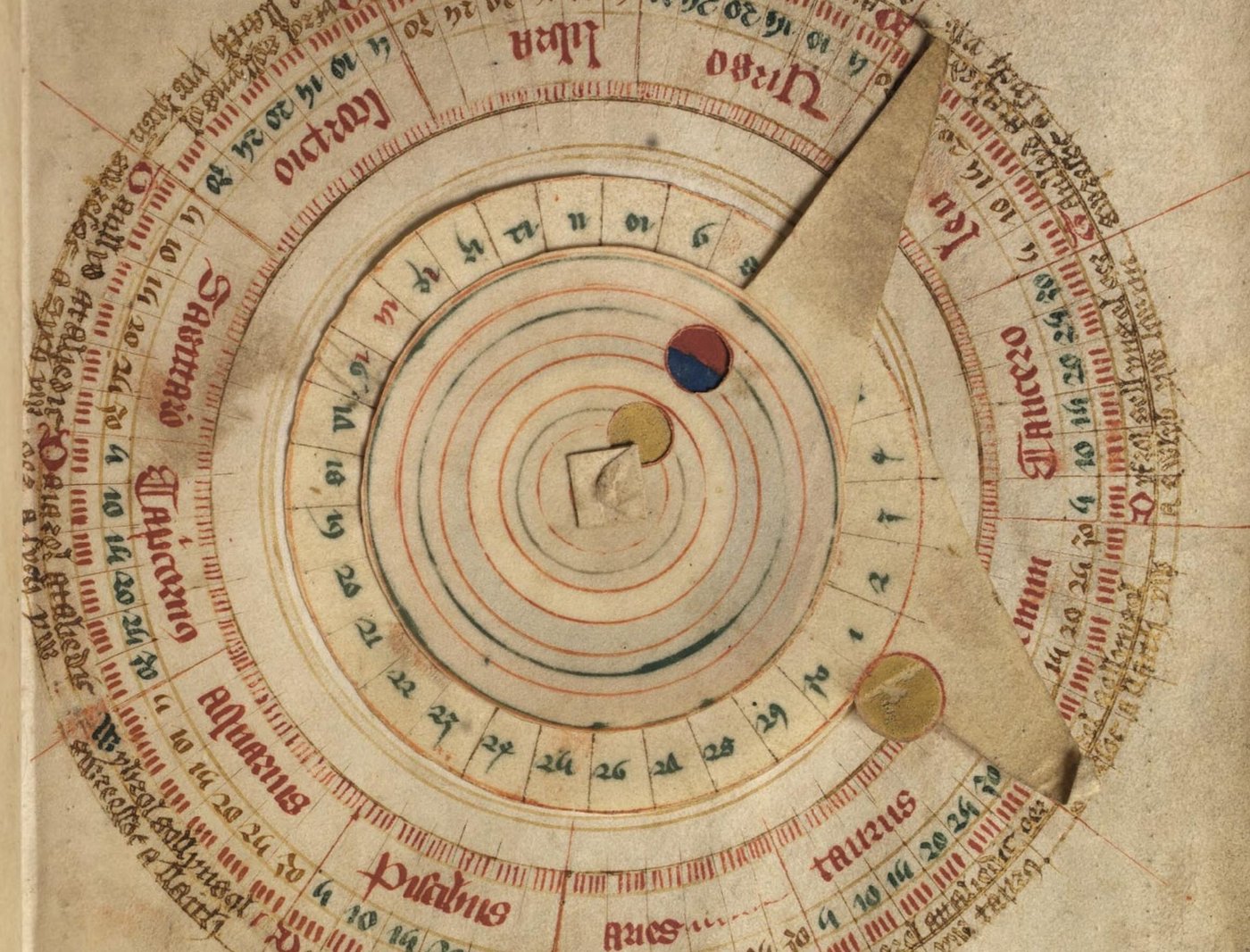
In 1964 Hans Eysenck published a diagram with two axes and the four classical temperament names printed around the rim. It is the honest starting point for what survived the twentieth century and what did not.
In 1964 Hans Eysenck and Sybil Eysenck published a questionnaire called the Eysenck Personality Inventory. Fifty seven questions, answered yes or no, scored in a few minutes. The manual that came with it contains a diagram that is worth looking at before anyone argues about whether the four temperaments are real. Two lines cross at right angles. The horizontal line runs from introverted to extraverted. The vertical line runs from stable to unstable, the dimension Eysenck called neuroticism. A circle is drawn around the crossing point and cut into four quadrants. The quadrants are labelled phlegmatic, sanguine, choleric, melancholic, and around the rim sit trait words taken from his own factor analyses: calm, sociable, touchy, moody.
This was not decoration and it was not a joke. Eysenck thought his numbers had walked back into an old room and found the furniture already there.
What Eysenck thought he had found
He was not the first to draw it. Wilhelm Wundt had already arranged the same four names on two dimensions, the strength of a person's feeling and the speed with which it changed. Eysenck's contribution was that he arrived at his two axes from the other end, from questionnaire data and factor analysis, and then noticed where he had landed. Extraversion and neuroticism kept coming out of the arithmetic no matter whose answers he fed into it. Put them at right angles and the four quadrants are unavoidable: stable extravert, unstable extravert, stable introvert, unstable introvert. Sanguine, choleric, phlegmatic, melancholic, in the classical order.
He then went further than the data could carry him. In 1967 he proposed that introversion reflected higher resting arousal in the cortex, and neuroticism the excitability of the limbic system. The dimensions replicated everywhere. The physiology behind them turned out to be far messier than his account, and most of that specific machinery has not held up. This is the useful pattern to keep in mind: the map kept surviving, the explanation kept being replaced. It is the same pattern you can watch across the long history of the humors.
The humors themselves are gone
There is no organ producing black bile. Nobody has ever found any. The four fluid scheme that Hippocrates and Galen worked with was a genuine attempt to explain what physicians could see, including the layers that separate in blood left standing in a bowl, and it was wrong. Nothing in modern medicine is waiting to rescue it. When people say the four temperaments have scientific support, this is not the part they can mean, and it is worth saying so plainly rather than letting the ambiguity do quiet work.
The four boxes do not survive the arithmetic
Here is the harder admission. Eysenck's own method does not produce four types. It produces two continuous dimensions, and the quadrants are lines drawn on a cloud of points that has no gaps in it. Score people on extraversion and you get a smooth hill, not four hills. Nick Haslam and colleagues reviewed the taxometric literature in 2012, the statistical work designed specifically to test whether a construct comes in kinds or in degrees, and found that the large majority of personality constructs came out dimensional. Discrete types are not there.
So the honest reading of a temperament label is a position, not a container. Most people sit near the middle of both axes, which is exactly what the old writers were describing when they talked about mixtures rather than pure types, and it is why the sharpest modern schemes went to five dimensions rather than four boxes. That comparison is worth its own look at the modern type systems.
The strongest evidence is about babies
The best supported temperament research is not about adults at all. Alexander Thomas and Stella Chess began following a group of New York infants in 1956 and tracked nine behavioural dimensions from the first months of life, finding stable patterns they grouped as easy, difficult, and slow to warm up. Jerome Kagan later showed four month old infants novel sights and sounds and sorted them by how vigorously they reacted. Roughly a fifth were high reactive. Those infants were more likely to become subdued, watchful children, and when a subset was scanned as young adults their amygdalae responded more strongly to unfamiliar faces.
Kagan was careful about what this meant. The prediction was probabilistic. Most high reactive infants did not become anxious adults. Something is inherited, it is a bias rather than a fate, and what happens to it depends on everything that comes after. Anyone wondering whether temperament can change should start there.
The verdict a sceptic can accept
A two axis map of reactivity is real, it is old, and Eysenck printed the classical names on it because that is genuinely where his data pointed. The four crisp categories are a convenience, useful for talking, false as biology. The humors are finished as physiology.
That leaves something modest and still worth having. If you take the test, read the result as a location on two continua that you share with most of the people around you, not as a box with your name on the lid. That is roughly what it can support, and it is not nothing.
Find your temperament
Take the test