Shakespeare, Jonson and the Language of the Humours
In 1598 Ben Jonson put a medical theory on stage. The four humours failed as science but survived as a language for character, from Shakespeare's melancholics to the way we still say someone is in a good humour.
In 1598 a sharp new comedy reached the stage, most likely at the Curtain in Shoreditch, just north of the city wall. It was Ben Jonson's Every Man in His Humour, and among the players, by Jonson's own later record, was a working actor and playwright named William Shakespeare. Jonson was twenty six and argumentative, and he had a thesis. The thesis was already in the title.
A word borrowed from medicine
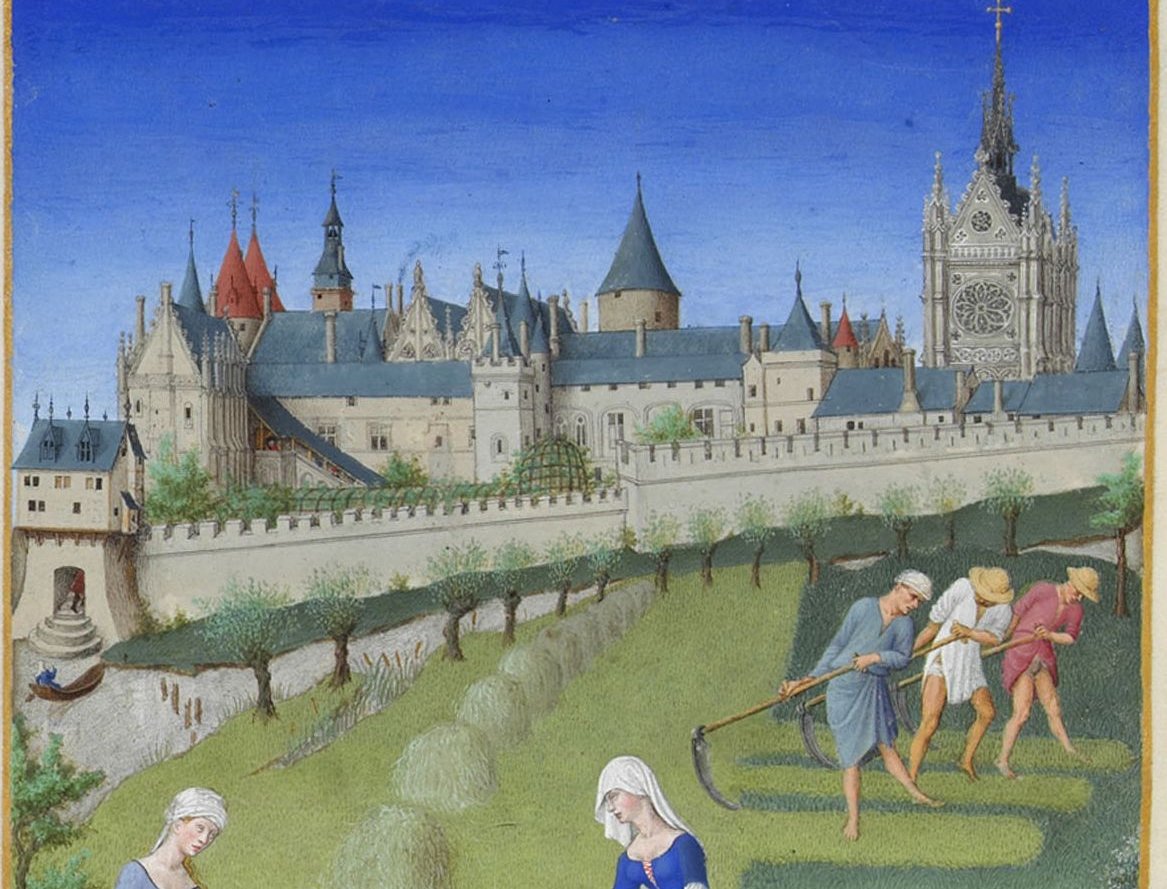
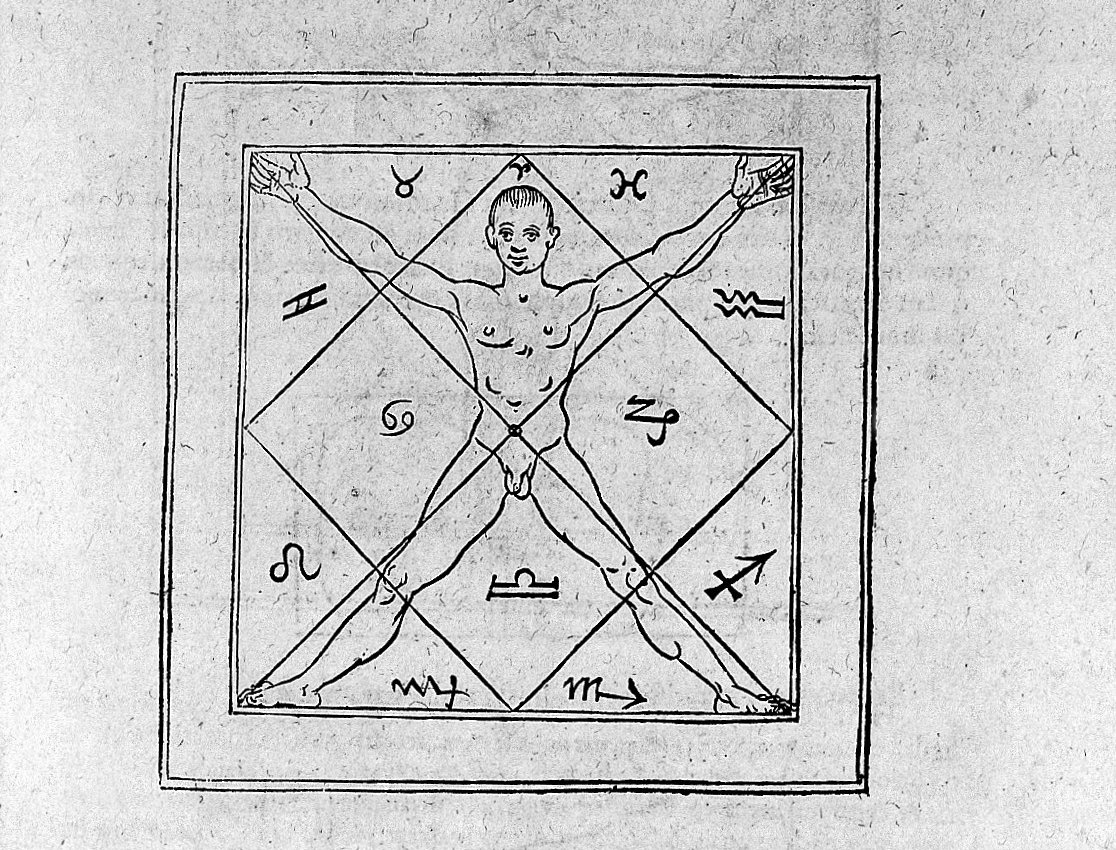
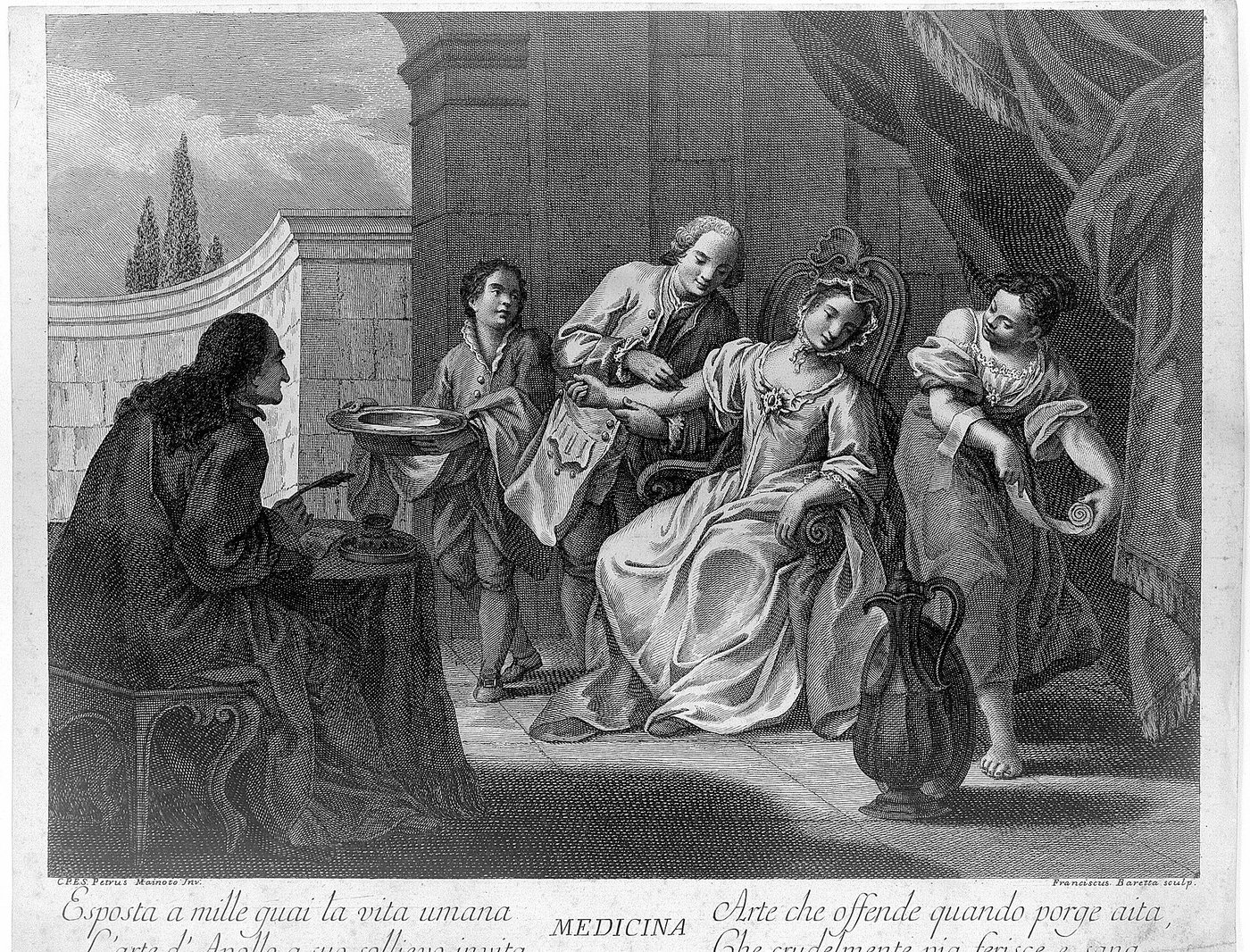
To Jonson's first audiences the word humour still carried its old weight. It came from medicine, where it named the four fluids thought to govern the body: blood, phlegm, yellow bile and black bile. A person's mixture of these was said to decide whether he ran hot or cold, quick or slow, cheerful or grave. This is the framework behind the four temperaments, inherited from Greek physicians and carried into English through centuries of Latin medicine. An educated Londoner in 1598 knew that too much black bile made a man melancholic, and that a feverish patient had an excess of blood. The vocabulary of the sickroom was common property.
Jonson builds a genre on it
Jonson took that medical idea and turned it into a rule for comedy. In his plays a humour is a single ruling trait that has swallowed the whole person. One man is all jealousy, another all bragging, another all gullibility. He made the principle explicit in the Induction to Every Man Out of His Humour, staged the following year, where the character Asper offers a definition.
when some one peculiar quality doth so possess a man that it doth draw all his affects, his spirits and his powers, in their confluctions, all to run one way, this may be truly said to be a humour.
That is the comedy of humours in one sentence. Each figure is built around a dominant passion, pushed until it becomes ridiculous, and the plot exists to expose it. It was a mechanical idea of character, closer to caricature than to the mixtures described in temperament blends, but it was clear, and it was funny, and it worked on stage.
Shakespeare's humoral bloodstream
Shakespeare used the same vocabulary with a lighter hand. His people are soaked in humoral language without being reduced to it. Falstaff praises a good cup of sherris sack for warming the blood and driving the dull vapours up to the brain, a straight piece of humoral physiology delivered as a drinking speech. Jaques in As You Like It calls his gloom a melancholy of his own, compounded of many simples. When Antony stands over the dead Brutus in Julius Caesar and says the elements were so mixed in him that Nature might stand up and say this was a man, he is praising a balanced temperament in the plainest classical terms.
Hamlet is the fullest case. A prince who cannot act, given to black moods and long thought, would have read to the period as a melancholic, the type governed by black bile. The audience did not need the diagnosis spelled out. They carried the same working model of character in their heads.
The word slips its meaning
Something else was happening to the word at the same time. By the 1590s humour had begun to drift away from the body. It stopped meaning a fluid and started to mean a mood, a whim, a passing quirk of temper. Jonson himself complained that fashionable young men had seized the word and pinned it to any affectation. Shakespeare mocks exactly this fashion through Corporal Nym in Henry V and The Merry Wives of Windsor, who ends nearly every line with the empty tag that is the humour of it.
That drift is the ancestor of our own usage. When we say a person is in a good humour or a bad one, or that we are humouring a difficult relative, we are using a word that once named a bodily fluid and now names a state of mind. The old physiology is gone from the phrase. Its shape remains.
Dead science, living language
The medicine did not survive. Over the next two centuries the theory of the four fluids fell apart under better anatomy and chemistry, and by the nineteenth century humoral medicine had ended as a serious account of the body. What survived was the language. We still call people sanguine or phlegmatic. We still read faces and manners for a person's basic cast, an old habit examined in reading the face. If you want to know your own leaning, the test uses the same four names.
This survival is not an accident. The humours failed as biology, but they gave people a compact way to talk about why one friend is quick and warm and another is slow and heavy. That need did not disappear when the science did. The theatre kept the words alive because the words were useful, and they are useful still.
Find your temperament
Take the test