How Humoral Medicine Ended, and How Slowly It Went
Vesalius could not find Galen's anatomy in a human body in 1543, and Harvey showed that blood circulates in 1628. Physicians went on bleeding patients for another two hundred years, and the reason why is the interesting part.
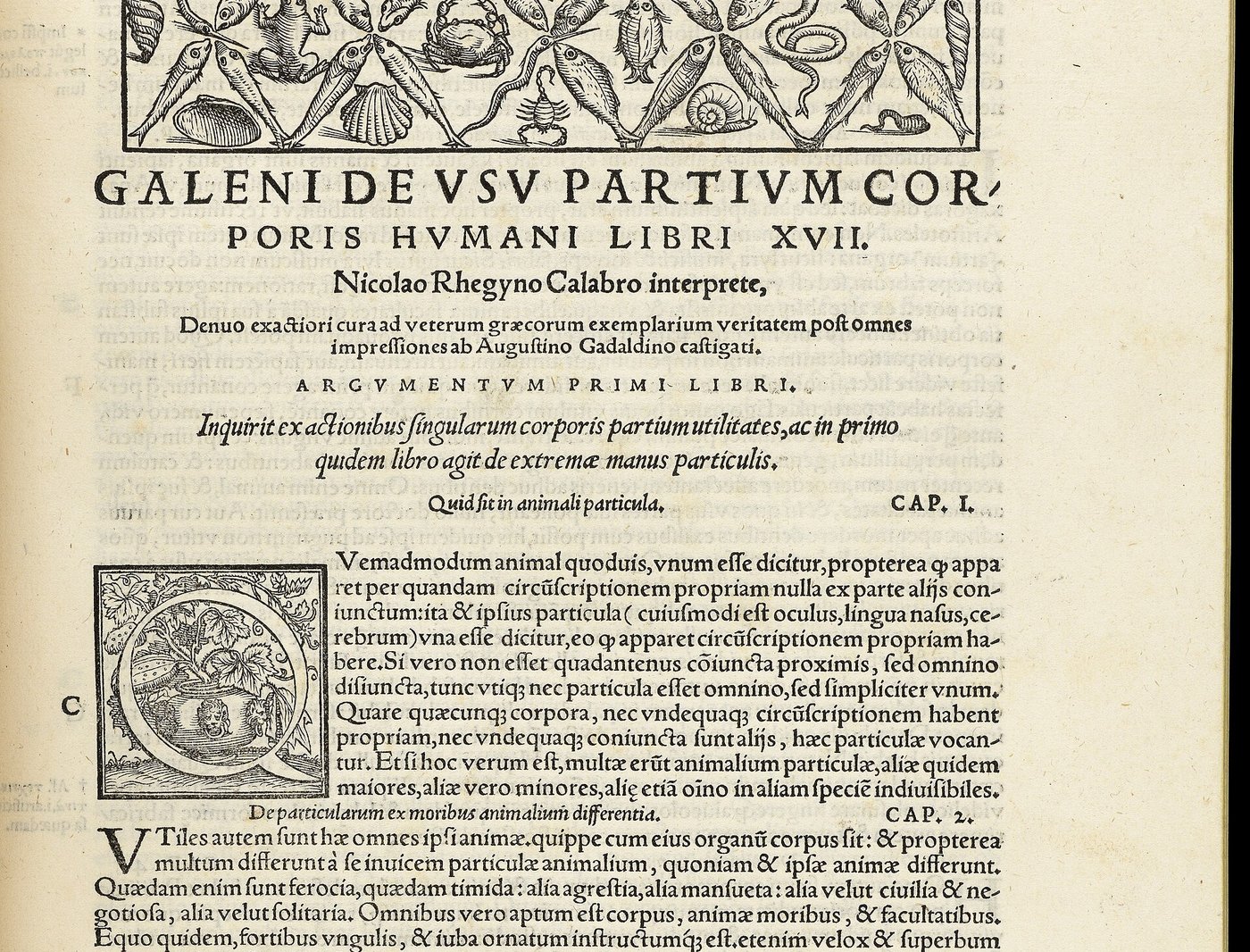
Andreas Vesalius was twenty-eight when his De humani corporis fabrica was printed in Basel in 1543. The strange thing was that he had done the cutting himself. In the old anatomy a professor read Galen aloud from a chair while a barber surgeon opened the body below him; if the two disagreed, the body was the oddity. Vesalius stood at the table, and kept finding structures Galen described that were not there.
The book that did not match the body
The clearest case is the rete mirabile, a mesh of vessels at the base of the brain where Galen placed a crucial refinement of the spirits. Vesalius could not find it in a human. It exists in oxen and sheep, which is where Galen had been looking; dissecting human bodies was not open to him in second century Rome. In the revised edition of 1555 he also admitted he could not find the pores supposed to let blood seep through the wall between the ventricles.
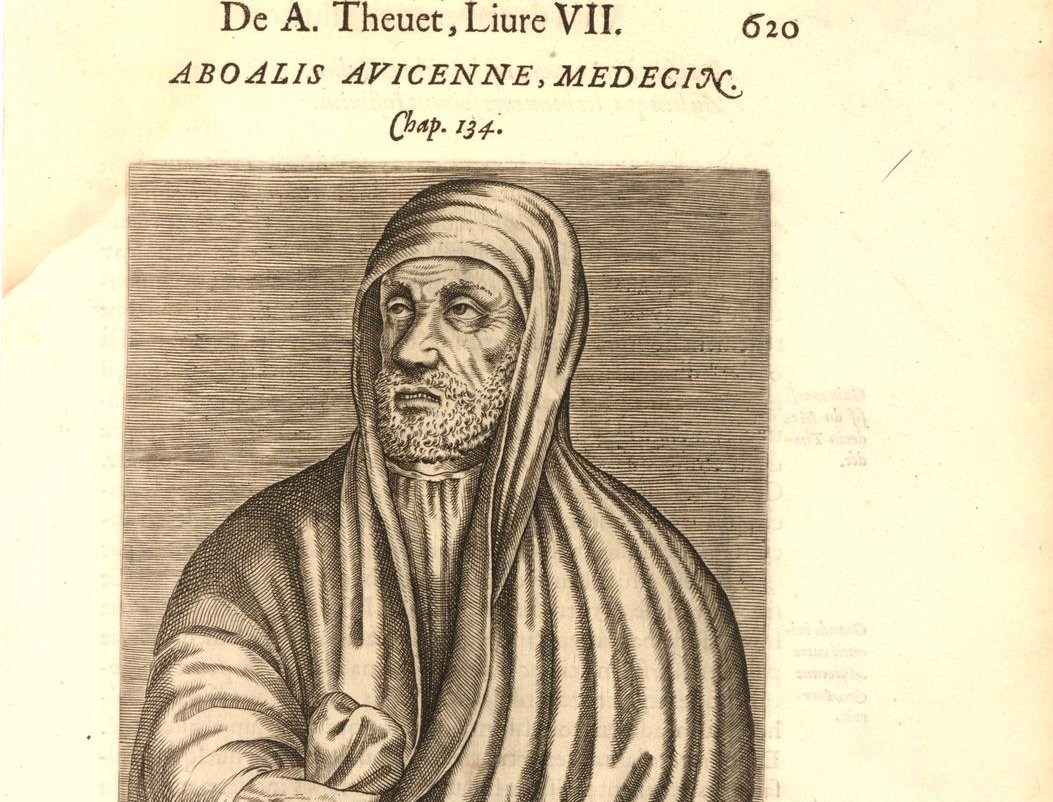
This should have been fatal. It was not. Galen had built something so large and so internally sensible that a few missing parts read as errors of detail. The system is laid out whole in Hippocrates, Galen and the four temperaments, and was extended with great care by Avicenna. Correcting a building's floor plan is not the same as condemning the building.
Harvey removes the plumbing
William Harvey's De Motu Cordis appeared in 1628, and its central argument was arithmetic. He estimated how much blood the heart throws out per beat, multiplied by the beats in half an hour, and got a quantity far larger than anything a person could eat in that time. So blood is not made fresh in the liver out of food and used up at the edges of the body. It goes round and comes back.
That quietly removed the plumbing the humoral theory needed. If blood is not continually made and consumed, it cannot pile up as an excess waiting to be drawn off. Harvey bled his patients anyway and did not think he had ended anything. In a sense he had, and nobody noticed for two centuries.
Why the model was reasonable
It is easy to be superior about this, and a mistake. Consider what a physician could see before the microscope. Blood, phlegm and two kinds of bile really do come out of sick people, and in patterns. Chest illness in winter produces phlegm. People differ steadily in temper, and not randomly. A theory tying the seasons, the food on the table, the age of the patient and the character in the room into one account was the best available reading of real correlations. That is why the long history of the humors is mostly a story of refinement rather than of doubt.
The strength was also the defect. The theory explained everything, and any outcome could be fitted to it afterwards, so nothing could count against it.
Rush's lancet, Philadelphia, 1793
In August 1793 yellow fever reached Philadelphia, then the capital. Something like five thousand died in a city of fifty thousand. Benjamin Rush, a signer of the Declaration of Independence and the most respected physician in America, stayed, treated the poor, and worked himself past exhaustion. He also bled his patients heavily, purged them with calomel and jalap, and grew more certain of the method as the epidemic went on. The journalist William Cobbett accused him in print of killing the people he treated. Rush sued for libel and won.
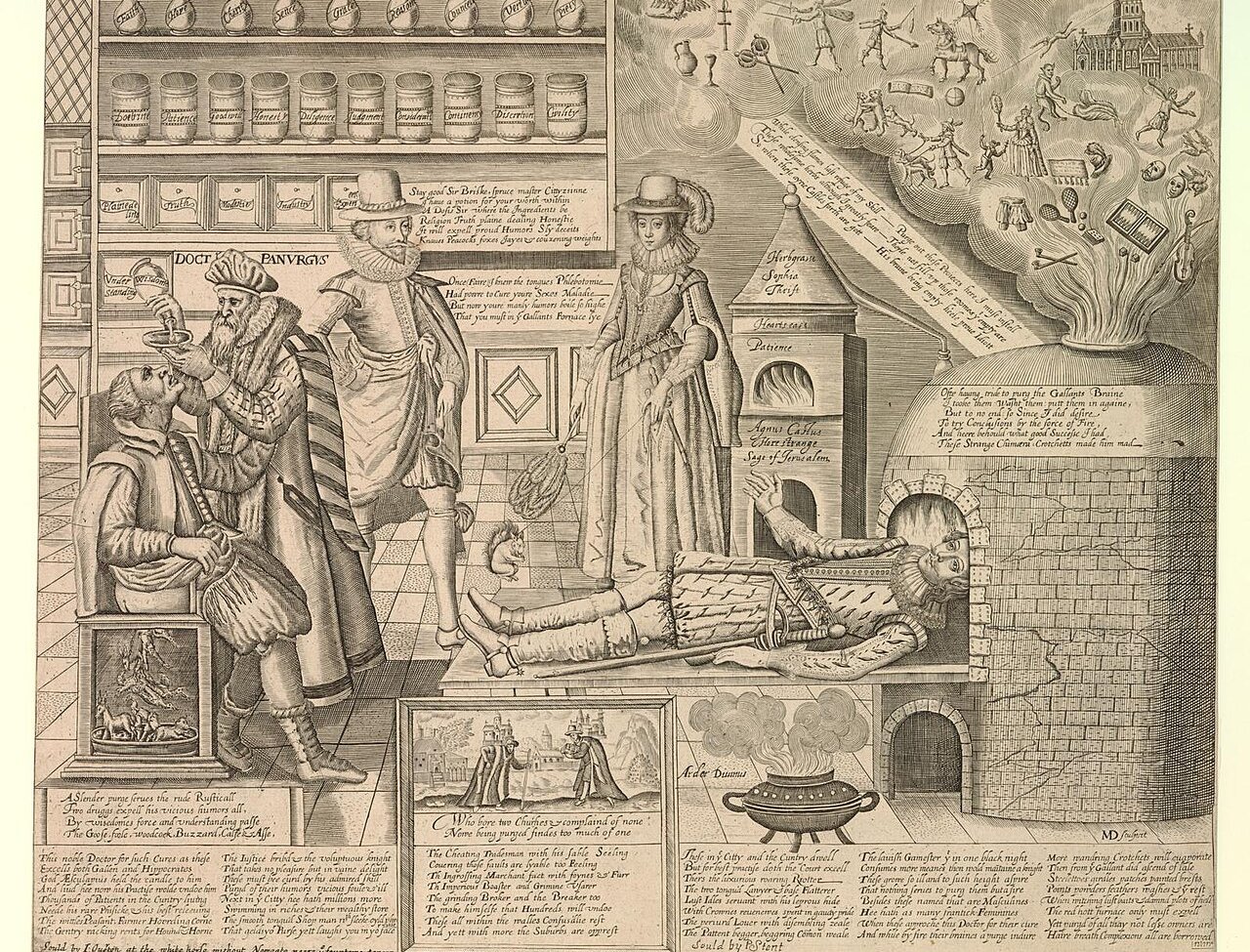
Rush was neither fool nor fraud. He was a brave man reasoning inside a framework that absorbed every death as a case brought too late and every recovery as proof. His instruments had barely changed either: the lancets and cupping glasses in how the four humors were once treated would have been familiar to a Roman.
Someone finally counts
Pierre Charles Alexandre Louis, working in Paris hospitals in the 1830s, did what almost nobody had done. He counted. His 1835 study of bloodletting in pneumonia set patients bled early against patients bled later and tallied who died and when. The benefit everyone knew was there turned out to be small, ambiguous and nothing like what the theory promised. He called it the numerical method, and was careful about the limits of his own figures.
The point was never that bleeding did nothing. It is that for two thousand years nobody had put the question in a form that could come back no.
What actually finished it
The end arrived from outside. Rudolf Virchow's cellular pathology of 1858 moved disease into the cells rather than the fluids. Then Pasteur and Koch gave illnesses specific causes: this organism, this disease, this way of catching it. Once you can name what made a patient sick, an excess of a humor stops explaining anything and becomes at best a symptom. Bloodletting faded within a generation, less because it was disproved than because there was somewhere else to stand.
What survived is the observational part, the old noticing that people arrive in recognisable dispositions. That is a different claim from the medicine, and the comparison with modern personality models is where it gets tested now. If you are curious where you sit, the test is a fair place to start, read as a tendency and not a fluid.
The lesson is not that the old physicians were credulous. It is that a theory accounting for every observation is nearly impossible to kill, and that the plain question, counted rather than argued, took two thousand years to ask.
Find your temperament
Take the test