Avicenna and the Four Humors
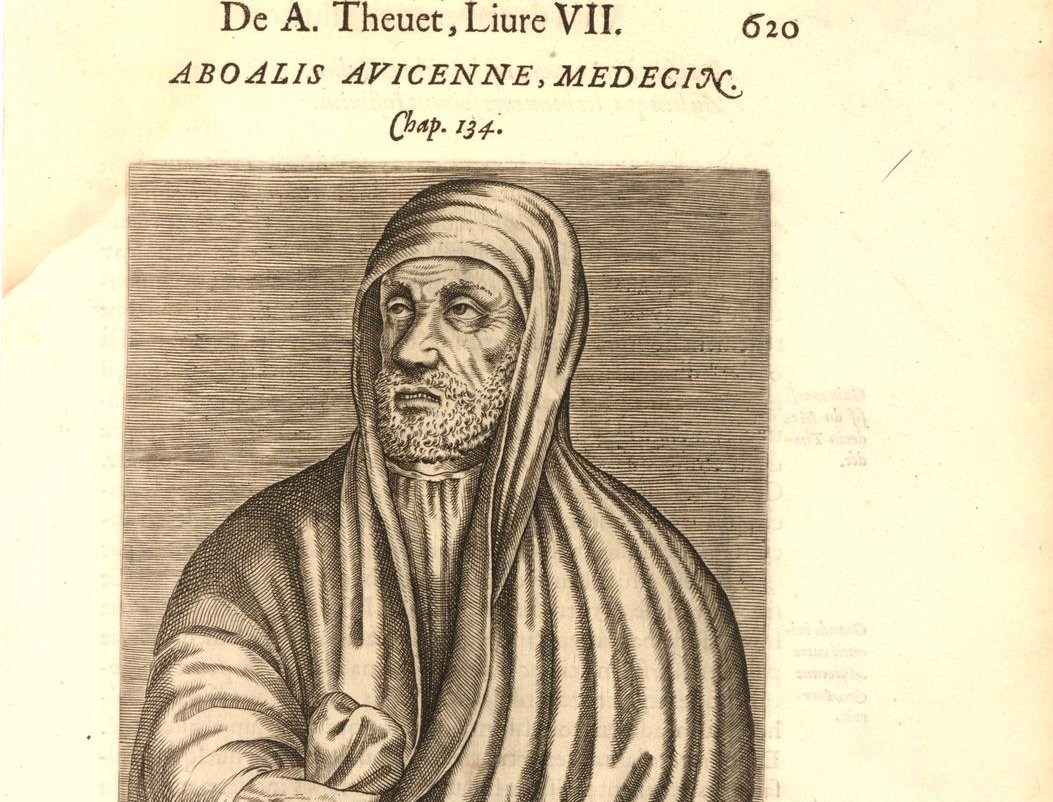
A teenage boy in Bukhara talks his way into a royal library, then grows up to write the medical book that Europe and the Islamic world studied for six hundred years.
A teenage boy talks his way into a royal library. That, more or less, is how Ibn Sina told the turning point of his own youth.
He was born around 980 in a village near Bukhara, in what is now Uzbekistan, then a bright corner of the Samanid lands. By his own account, dictated late in life to his student al-Juzjani, he had memorized the Quran by ten and was reading medicine as a teenager. When the Samanid ruler Nuh ibn Mansur fell ill and the court physicians ran out of ideas, the young Ibn Sina was brought in. The ruler recovered, and the reward the boy asked for was the run of the palace library.
The man the West called Avicenna
Ibn Sina, Latinized generations later as Avicenna, wrote on nearly everything: logic, metaphysics, astronomy, music, the soul. He belongs on the short list of great philosophers of his age, not only its physicians. But the book that carried his name farthest was medical.
Around 1025 he finished the al-Qanun fi al-Tibb, the Canon of Medicine. He died in 1037, near Hamadan in present-day Iran, worn out, the sources suggest, by a life lived at full speed.
The Canon was a synthesis on a grand scale. It gathered the Greek founders, Hippocrates and Galen, together with Persian and Arabic medicine, and arranged the whole inheritance into one ordered structure you could actually teach from. Translated into Latin by Gerard of Cremona in the twelfth century, it became a fixture in the new universities of Europe, at Montpellier, Bologna, Padua. For roughly six centuries, to learn medicine in much of the world meant opening Avicenna.
Mizaj, or temperament made precise
The four humors he inherited, blood, phlegm, yellow bile, and black bile, reached him from where the four humors began, in Greek thought. What Avicenna added was rigor.
His word for temperament was mizaj, a blend or mixture. When the Canon was rendered into Latin, mizaj became complexio, which is why an old English word for constitution is still complexion. The idea was that each body settled into its own proportion of the qualities, hot or cold, wet or dry, and that this blend shaped both health and character.
Where earlier writers gestured, Avicenna catalogued. He treated the balanced temperament as one case and mapped the imbalances around it in fine gradation. More striking, he insisted the blend was not fixed. A person's mizaj shifted with:
- age, since children run warm and moist while the old turn cold and dry
- climate, so a body in a hot dry country tends differently from one in a cold wet one
- habit, meaning diet, sleep, work, and the daily rhythm of a life
A physician's job was to read the whole picture, then steer it back toward that person's proper balance.
More than a warehouse
There is a tired story in which Muslim scholars simply kept Greek learning safe until Europe was ready to collect it. The truth is more interesting, and more to their credit.
The physicians of the Islamic golden age argued with the Greeks. A century before Avicenna, al-Razi, the Rhazes of Latin texts, wrote a book of Doubts about Galen and trusted his own bedside observation over the master when the two disagreed. Hospitals in Baghdad and Cairo took in patients, taught students, and kept records. Pharmacology grew richer, surgery more careful. Avicenna worked inside a living tradition that questioned and tested, not a vault.
The long afternoon of the Canon
The medicine was still built on humors, and humoral theory is history now, not biology. There is no black bile to balance, and bleeding a fever rarely helped. Avicenna believed things about the stars and the elements that no physician holds today.
Yet the Canon held its place with remarkable stubbornness. It was printed in Europe again and again after Gutenberg, and it was still assigned in medical faculties well into the sixteenth and seventeenth centuries, long after the man who wrote it near Hamadan had become a name in Latin.
A boy who charmed his way into one library ended up furnishing the shelves of a thousand others. The chemistry was wrong. The habit of looking closely, writing it all down, and ordering what you find was exactly right.
Find your temperament
Take the test