Reading the Face: Physiognomy and the Four Temperaments
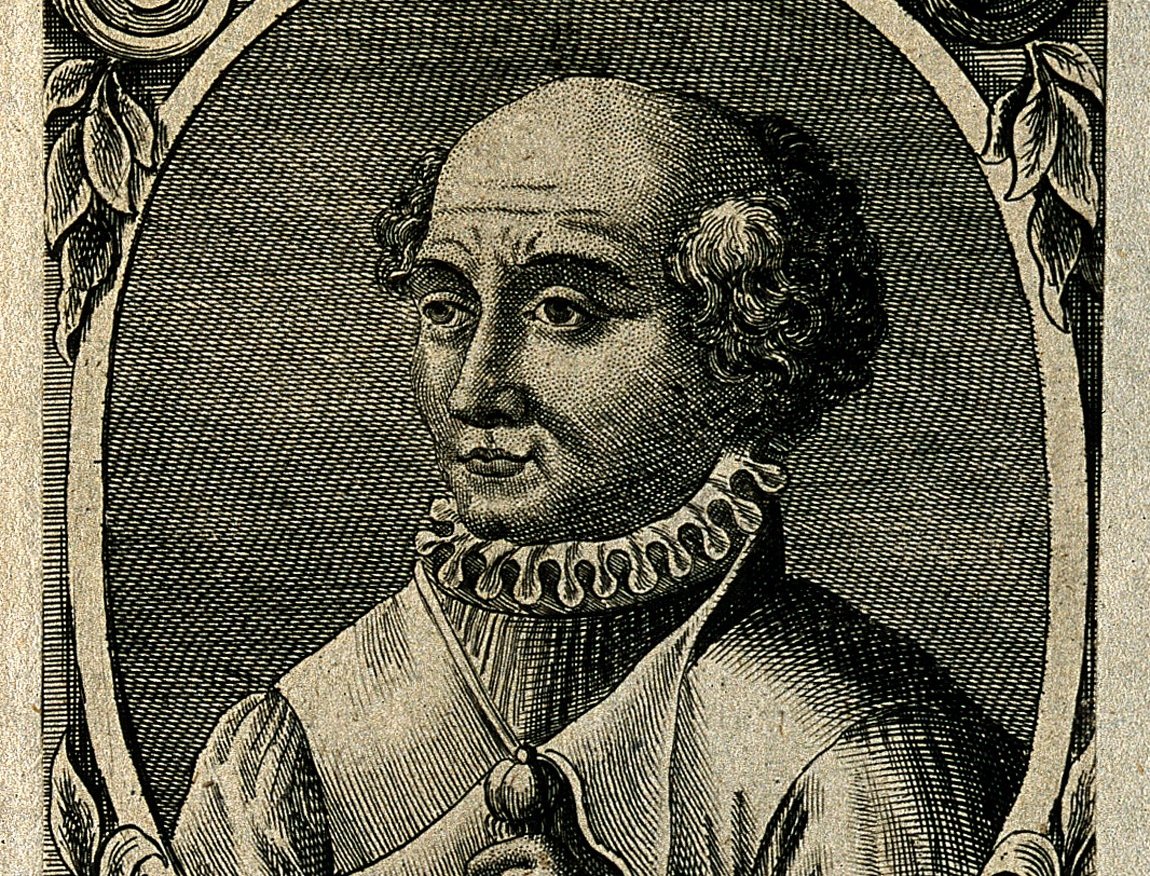
Colour, warmth, hair, flesh, the pulse, the look of the eye. A physician once read the mixture straight off the body, and the shortcut ran from Galen to della Porta's woodcuts to Lombroso's born criminal.
In 1586 a printer in Naples set a man's head beside the head of an ox on the same page. The same heavy jaw. The same wide, slow eye. The book was Giambattista della Porta's De humana physiognomonia, and the picture makes no argument. It shows you the pair and waits. Readers supplied the rest: patient, dull, hard to anger, hard to teach. It is easy to file that page under superstition, but in 1586 it was medicine.
Complexion used to mean the mixture itself
The word gives the game away. Complexion comes from the Latin complexio, a braiding together, and it rendered the Greek krasis, the blend of hot, cold, wet and dry in a living body. When a physician in Padua said a man had a hot and dry complexion he was not talking about the man's cheeks. He was naming the ratio underneath. That the ratio surfaced on the cheeks too was the useful part.
Galen had argued, in a short and much disputed treatise, that the faculties of the soul follow the mixtures of the body. The mixture governs the mind, and the mixture shows in the flesh. Everything physiognomy ever promised sits inside that sentence. Pull out either half and the structure drops. The argument runs through Hippocrates and Galen.
The signs at the bedside
Avicenna, in the first book of the Canon of Medicine, gives ten headings for judging a mixture, none of them mystical, all of them things a doctor with no instruments can observe.
- Colour. Ruddy read as blood, yellowish as yellow bile, dusky as black bile, a slack whiteness as phlegm.
- Warmth. The hand laid on the chest: hot and moist sanguine, hot and dry choleric, cold and dry melancholic, cold and moist phlegmatic.
- Flesh. Full and firm, or lean and hard, or soft and loose under the thumb.
- Hair. Thick, dark, early receding hair was taken for heat, fine and thin hair for cold.
- The pulse. Quick and strong when hot, slow and soft when cold.
- The eye. Bright and moving, or fixed and burning, or downcast, or heavy and wet.
No single sign settled anything. Avicenna is careful that they are weighed together, and against the patient's age, country, season and habits. Read that way it is nearer to what physicians actually did at the bedside than to fortune telling. A shortcut, and shortcuts are what a doctor with no laboratory has.
From the ox to the silhouette
The animal comparison is much older than della Porta. The pseudo Aristotelian Physiognomica, a Greek text out of the Peripatetic school, already offers resemblance to a species as a way of reading a man: the lion for courage, the ox for slowness, the deer for fear. It also generalises about whole nations, which tells you where the trouble was going to come from. Della Porta's contribution was the woodcut. Drawn rather than described, the resemblance stopped being a claim you could examine and became something you could simply see. Notice what had gone missing. The humours had slipped out. What began as a claim about a hidden ratio was now a claim about a likeness, and the old logic of correspondence set out in the body as a small universe was doing the work alone.
Two centuries later a pastor in Zurich made it a craze. Johann Caspar Lavater published his Physiognomische Fragmente in four volumes between 1775 and 1778. The young Goethe helped with the work and later kept his distance. Lavater loved the silhouette, traced from a shadow on paper, because it left only outline, which he took for settled character, not passing mood. Lichtenberg, in Göttingen, published a hard satire against the business in 1778 and was ignored.
Calipers, criminals and the worst chapter
Then it curdled. Petrus Camper measured the facial angle. Franz Joseph Gall mapped mental faculties onto bumps of the skull. Samuel George Morton filled skulls with seed and shot and published Crania Americana in 1839. In 1876 Cesare Lombroso brought out L'uomo delinquente and handed Europe the born criminal, marked from birth by a jaw, a brow, an ear, a throwback you could arrest on sight. From there the line runs straight into race science.
The humoral frame was long gone. Nobody was measuring bile any more, but the habit had been inherited whole: that a face is evidence, and that the man reading it is a neutral instrument.
The face never confessed anything. It only returned what the reader brought to it.
We are still reading faces and still getting it wrong
People judge a stranger's competence and trustworthiness from a photograph in about a tenth of a second, observers agree with one another to a striking degree, and the agreement predicts almost nothing. Agreement is not accuracy. It only means we share our prejudices. And researchers still feed photographs of convicts to algorithms and announce that criminality is visible, which is Lombroso with better hardware.
The honest position is narrow. Faces carry health, age, fatigue and mood, and we read those tolerably well. They do not carry character, and there we are still as bad as Lavater, which is why any serious account of temperament and the modern type systems begins by asking a person rather than looking at them. Even the test here is only a set of questions. Asking is the correction that centuries of looking never found.
Find your temperament
Take the test