Herbs and the Four Humors: When Plants Had a Temperature
In the medieval pharmacy every plant was hot, cold, wet, or dry, and prescribed to push a body back toward balance. Here is how that worked, herbals and screaming mandrake and all.
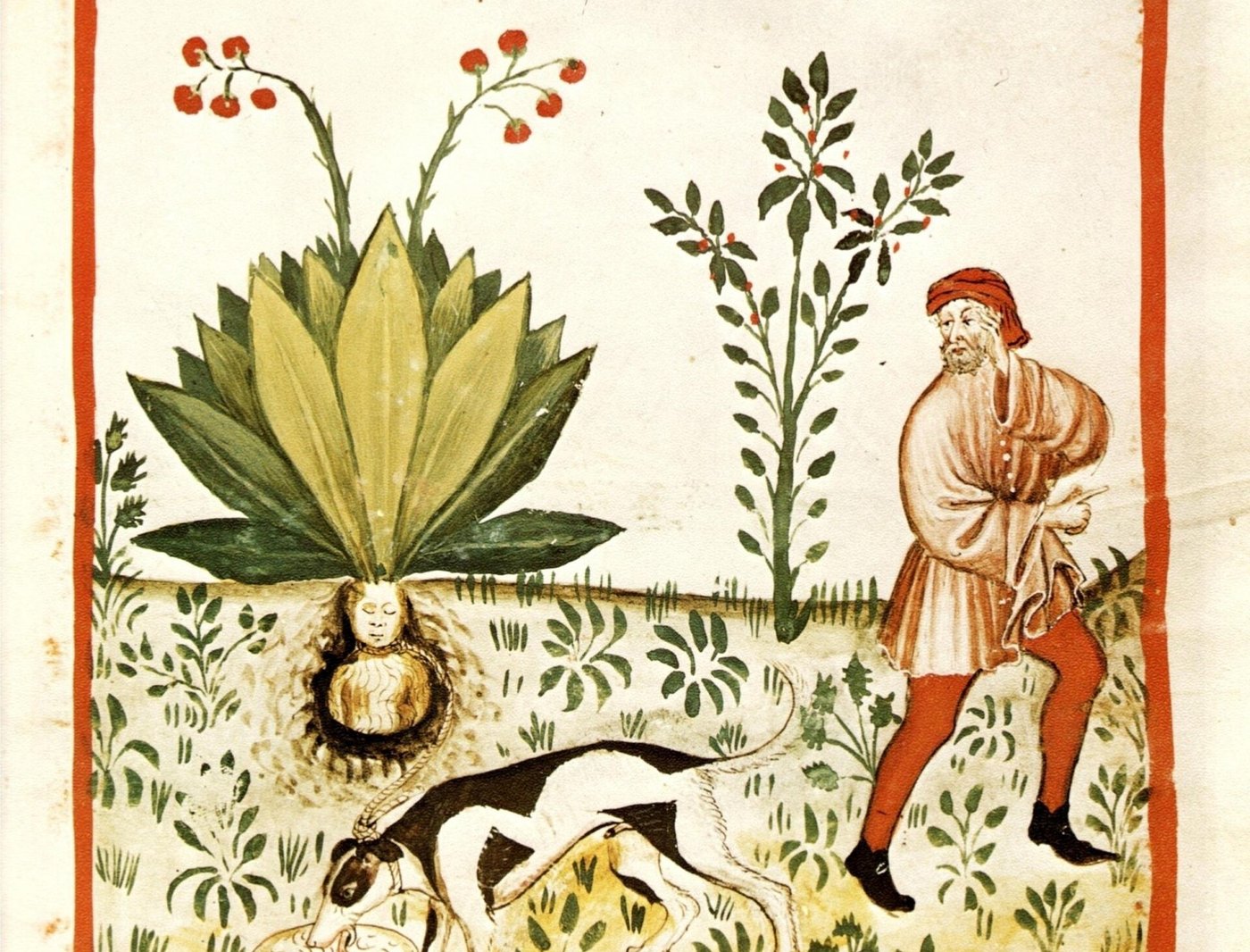
A woodcut printed at Mainz in 1491 shows a small dog straining at a leash. The far end is tied to a plant half out of the ground. A man stands well back, fingers pressed into his ears. The plant is a mandrake, and the picture is a set of instructions: how to pull the root without dying.
The mandrake was said to scream when torn from the earth, a shriek that killed or maddened anyone who heard it. So you let the dog do the pulling. And this strange page did not sit in a book of folk tales. It sat in the Hortus Sanitatis, the Garden of Health, one of the most respected medical books you could own.
To see why, you have to know how a medieval pharmacy actually worked. It ran on the four humors, and every plant in it had a temperature.
Every plant had a temperature
The system, inherited from Greek physicians and sharpened by Galen in the second century, sorted the whole living world along two pairs of qualities: hot or cold, wet or dry. A plant was a small parcel of those qualities, and taking it nudged the balance of fluids inside you.
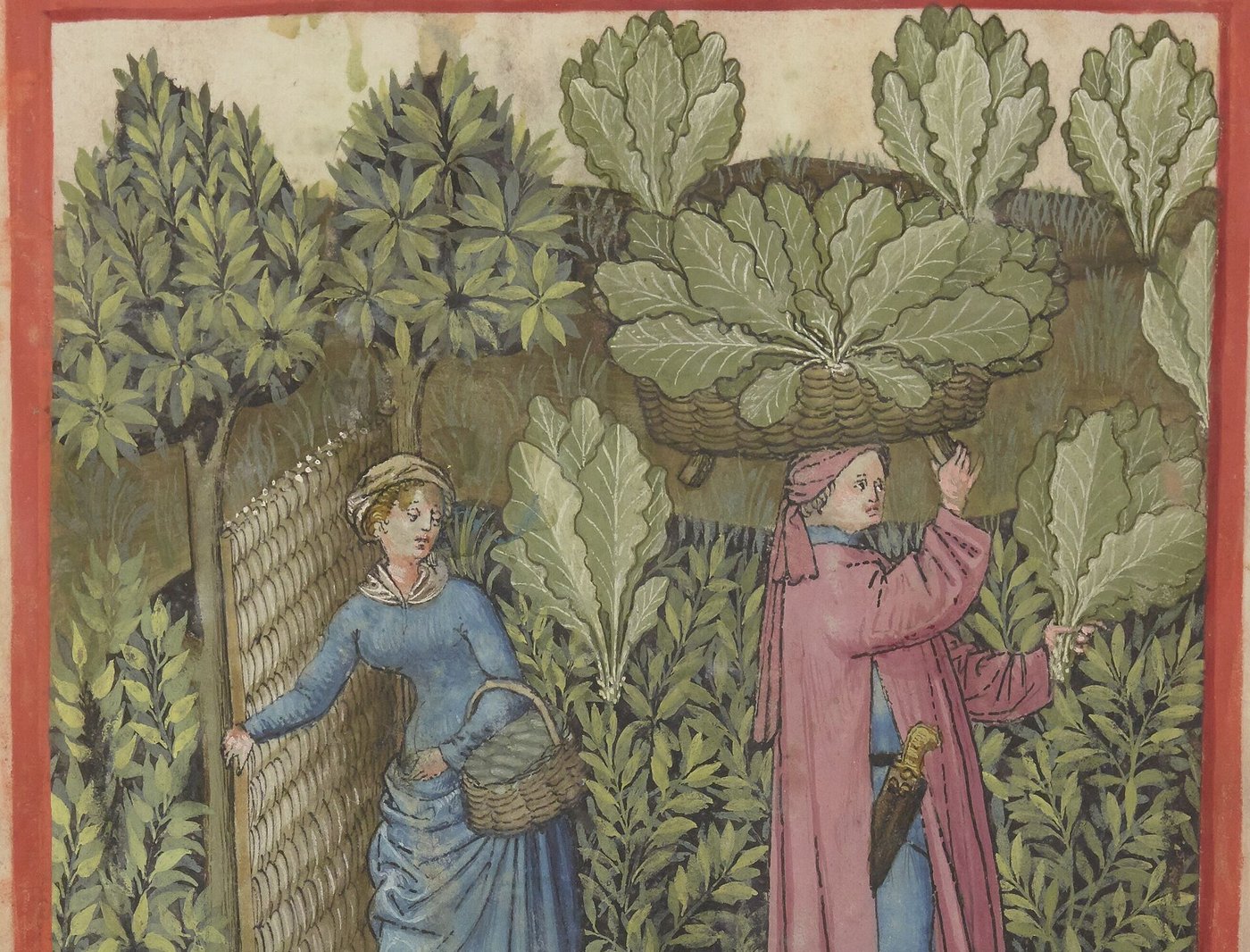
Pepper, ginger, and mustard were hot and dry. Lettuce, purslane, and the poppy were cold and moist. Rue ran hot, the rose cool. Physicians even graded the strength, first degree through fourth, so a mild warming herb sat in the first degree, pepper in the third.
The logic was simple and, on its own terms, tidy. Opposites correct each other. A body burning with a hot choleric fever was cooled and moistened with violet, barley water, and lettuce. A cold, sluggish phlegmatic complaint, all damp and heaviness, was warmed and dried with ginger, wormwood, and pepper. The pharmacy pulled the same lever as the kitchen, which is why food and the four humors obeyed the very same rules, and why how the humors were once treated reached for herbs long before it reached for the lancet.
Books of green
This knowledge lived in herbals, some of the loveliest books of their age.
The oldest and most copied was De Materia Medica, written in Greek by Dioscorides, an army physician, in the first century. For more than a thousand years it was the backbone of Western and Islamic pharmacy alike. In the late Middle Ages came printed herbals a wider public could hold: the German Gart der Gesundheit at Mainz in 1485, and the grander Latin Hortus Sanitatis in 1491, packed with woodcuts of plants, animals, and stones.
An entry rarely just named a plant. It gave the nature and degree, told you which part to use and when to gather it, and warned where it could harm. Wormwood, hot and dry and bitter, warmed a cold stomach and drove out worms. The rose, cool and binding, calmed heat and inflammation. Page after page, it reads like a working manual, because that is what it was.
The root that screamed
No plant gathered more legend than the mandrake, and you can see why. Its thick root often forks into two legs, sometimes with a knob of a head and stubs for arms, so that pulled from the soil it looks unnervingly like a small human body.
The stories grew to fit the shape. The mandrake sprang up beneath gallows, people said, from the last drops of a hanged man. Its cry on being uprooted was fatal. So the herbals passed down a careful ritual: draw three circles around the plant with a sword, loosen the soil, tie a hungry dog to the root, then step back and call the dog or toss it meat. The dog lunges, the root tears free, and the animal, not the gardener, takes the deadly scream.
Underneath the theatre was a real, dangerous plant. Mandrake belongs to the nightshade family, its root loaded with the same compounds as henbane and deadly nightshade. In humoral terms it was reckoned cold in a high degree, a narcotic. Steeped in wine it genuinely dulled pain and brought sleep, and it went into the soporific sponge, the spongia somnifera, that a surgeon might hold under a patient's nose before cutting. It could also kill. The screaming was a fable. The poison was not.
History, not herbal advice
None of this is pharmacology, worth saying plainly. There are no humors, so no herb warms or cools one. Lettuce does not lower choleric fire, because choleric fire, in that sense, does not exist.
But the people turning these pages were not simple. They worked a coherent system, watched closely, and many of their plants did something real: willow bark, which they filed under cooling, holds the compound behind aspirin. The map was wrong in its labels and often shrewd in its notes. And the mandrake still earns its warning, not because it screams, but because, like several old friends of the apothecary, it can quietly stop a heart.
The scream was a story. The plants were real, and so was the care people took with them.
Find your temperament
Take the test